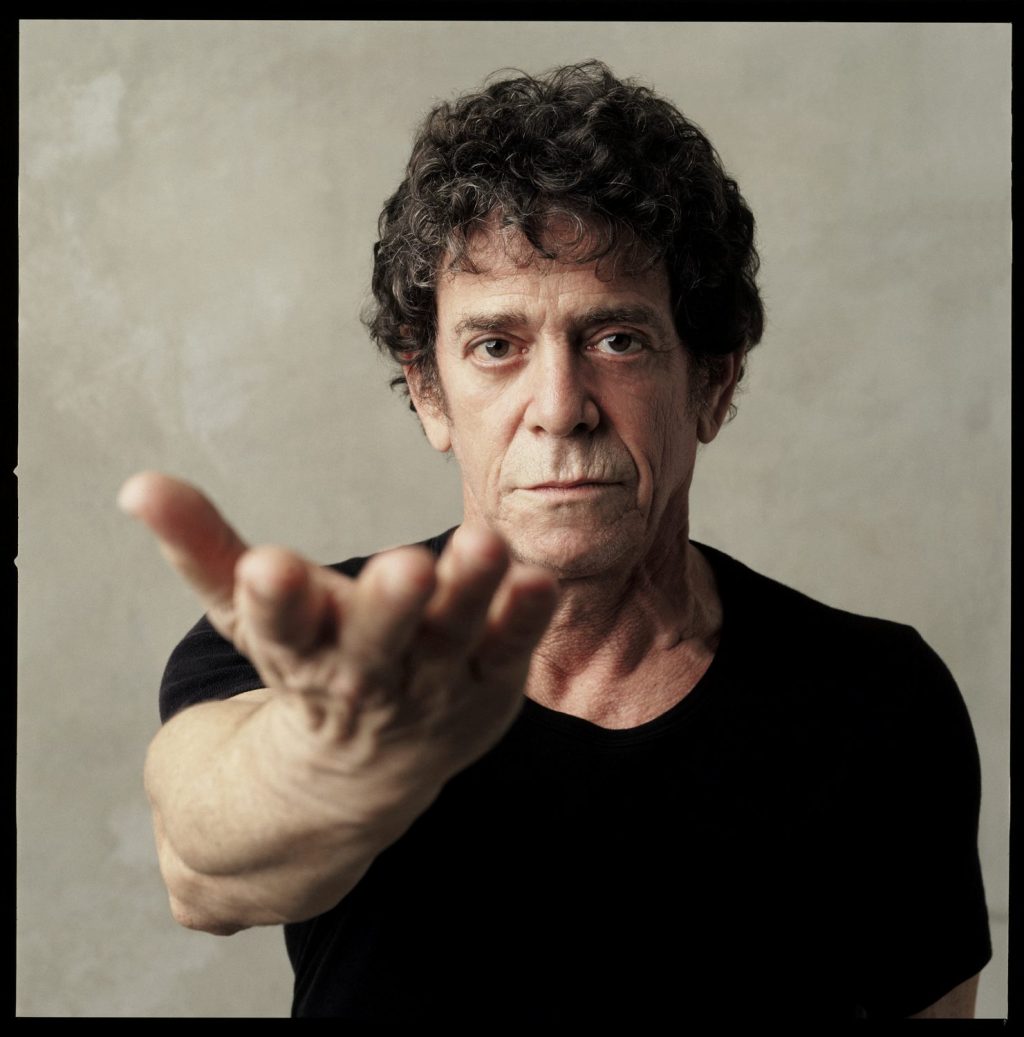
Usually when I think &/or write about Lou Reed, I talk about the oft-underlooked outsidery queerness of LULU [2011] or METAL MACHINE MUSIC [1975]; the nature & practice of songwriting; electric guitars & the meaning of tone; lyrics & their delivery (‘method singing’); or the way Rachel Humphreys is everywhere in Lou’s greatest work once you know what you’re looking for (thanks to Will Hermes’ THE KING OF NEW YORK [2023] for pointing out this last).
In HUDSON RIVER WIND MEDITATIONS [2007], however, most of the above are hardly present.
Although, in truth, a straight line can be drawn between WIND MEDITATIONS and METAL MACHINE MUSIC, “Fire Music” [THE RAVEN, 2003], “Dorita (The Spirit)” [MAGIC & LOSS, 1992], “Like A Possum” [ECSTASY, 2000], & Velvet Underground foibles too numerous to list (shout-out to “Hey Mr Rain” [LIVE MCMXCIII, 1993] from the reunion live album). Mutant synth afficionados may grok at which I gesture.
I digress I digress.
I’m not sure how common an intersection it was in 2007 to be a Lou Reed fan with an interest in meditation. (Maybe more common than I thought, since “peaceful people don’t seek peace” per my mother the Buddhist.) If I knew back then that Lou practiced tai chi, I had yet to give it much thought—in spite of my own slight history with the practice.
A close family friend was big into tai chi so I’d seen the posters with pictures of the forms & knew that it was the chilled-out martial art, as opposed to the then-better-known terms karate & kung fu (this was in the 80s & 90s in rural Vermont). Then in his 40s & teaching social studies at a local high school, he told us about Bruce Lee; about David Carradine’s TV turn as Caine; & not incidentally, over the years, about Star Trek, Dr. Who, dowsing, labyrinths, & a whole array of other crucial info.
At some point in the 90s our friend got into qigong, which we were given to understand was the roots or foundation of tai chi. He was getting rid of the inessential, moving closer to the essence—maybe a little like John Paul Ziller in Tom Robbins first novel, ANOTHER ROADSIDE ATTRACTION [1971]—or Chogyam Trungpa Rinpoche’s teacher who came out of meditation, announced that the Chinese were coming to invade Tibet, and dropped dead w/ alarm only to awaken several days later & insist that everyone get rid of all inessentials from their practice such that the core of Tibetan Buddhism might be preserved… through young Chogyam Trungpa who then journeyed through the Himalayas to India & onward to Scotland where he met young mime & aspiring monk David Bowie. But anyway.
When I got to college [Bennington, 1994], to my surprise a tai chi class was available. I took it—which meant overcoming a lot of anxiety which I won’t get into right now—& a few of the moves & practices stayed with me for, well, ever. I still do them.
Meanwhile, my mother had become a Buddhist. I started reading up on her particular group & so learned about Pema Chodron, Chogyam Trungpa Rinpoche & mindfulness meditation. (My wife’s mother eventually became a Buddhist nun studying under Yongey Mingyur Rinpoche, who it turns out was also Lou Reed & Laurie Anderson’s guru.)
The college tai chi class was eye opening (nights with a head full of acid discovering that the energy ball was real). But once it was over, two or three tai chi warmups plus mindfulness meditation were all I had for intentional spiritual practice. I’d do my tai chi moves on large boulders, next to the river late at night. Meditation was more an alone-in-my-room kind of thing, sometimes with The Velvet Underground on the stereo.
Eventually I convinced myself that I didn’t know what I was doing with the tai chi warm-ups, & I stopped doing them. Alas. Turns out I was doing fine.
I bought HUDSON RIVER WIND MEDITATIONS by mail order as soon as it was available, just as I would with any new Lou. The first track was as wonderful as I’d hoped: undulating & enveloping, weirdly electronic—but not TOO electronic. Organic at its core. I meditated to it, slept to it, ate & thought & wrote to it. A friend sleeping over in the living room asked if I could leave track one on repeat for her during the night.
The rest of the disc was disappointing (at the time). I listened once or twice then ignored them. The disc as a whole found a place in my listening life as a novelty, well-suited for certain moods or amusing guests.
In 2023, a book appeared called THE ART OF THE STRAIGHT LINE. Lou had begun to write about his beloved tai chi—but time grew suddenly short;—& also it’s harder to write a book than you might think.
Laurie Anderson, the great multimedia artist & Lou’s wife since the 90s, pulled the book together after Lou’s death. To his notes she added essays & interviews—from folks who knew Lou through martial arts, rock&roll, some combination of the two, some other way entirely. The array of voices is astonishing, as is the depth of information contained in its pages.
An anecdote caught my attention: the story of a master who traveled to the States to lecture on tai chi. Rather than advance to the podium, he stood in the hall in standing mountain pose for an hour, saying nothing. The lesson, if it can be put into words, may have been: “Forget all the fancy stuff & get to where you can do THIS.”
Strip it down. Drop the inessential. Get to the essence.
I learned standing mountain, started doing it every day (for a modest 5 minutes or so), & quickly felt better than I had in a long, long time. Two years later & qigong is a big part of my day, every day. I have an array of moves & routines to practice, including a number of things which might be categorized as “silk reeling”. Silk reeling turns out to include the few “tai chi warmups” I learned in college.
I almost always listen to music while I practice. Usually rock&roll—Unwed Sailor’s UNDERWATER OVER THERE [2024] is a favorite, but Joan Jett or Lee “Scratch” Perry or Luscious Jackson or a million other things might do the trick as well. But for whatever oversought reason, it took me til now to try the WIND MEDITATIONS.
Turns out they’re perfectly suited to qigong—which should not be surprising, as Lou was a passionate & dedicated tai chi practitioner for 30 years & made the album in part to accompany his practice. And, as mentioned above, the roots of tai chi are in qigong.
More than just an excellent accompaniment, though, the sounds on HUDSON RIVER WIND MEDITATIONS participate. I found myself doing each move for longer, moving slower, going deeper, forgetting my self—losing track of my mind in the most wonderful way. The gusts of sound—derived, as I dimly understand it, from Lou’s own recordings of the wind outside his apartment on the Hudson—seemed to lift & propel my muscles, like a current of air supporting an eagle.
By the third time I practiced to HRWM, my sessions had begun to naturally extend in time. With no feeling of effort I passed through track one into formerly-tinnitus-exacerbating track 2 & beyond. (Track one is 28 minutes long. Track two is longer.)
the high-pitched drones tend to activate my tinnitus.
The high-pitched drones of track two are not piercing, exactly. & after half an hour of rolling low-pitched pulses, the unpredictable motions of streaky thin sounds brought needed energy. I had been about to stop, but I kept going for another ten minutes just to feel the feels.
I’m not sure how Lou arrived at his sounds. All he says in the liner notes is that he “composed this music for myself as an adjunct to meditation, tai chi, and bodywork, and as music to play in the background of life—to replace the everyday cacophony with new and ordered sounds of an unpredictable nature”. (He does give special thanks to “Ableton Live”). Anything else in my brain on this topic must have come from interviews he did at the time—a certain number of which were with tai chi & Buddhism magazines, as I recall!
There’s a lot more to say about Lou, tai chi, & this album & others that might fall into the same tradition/s.
“But”—in the words of Creepy Uncle Al—”Not now.”
 AURGG: An Unironic Rocker Girl's Guide!
Leave a comment